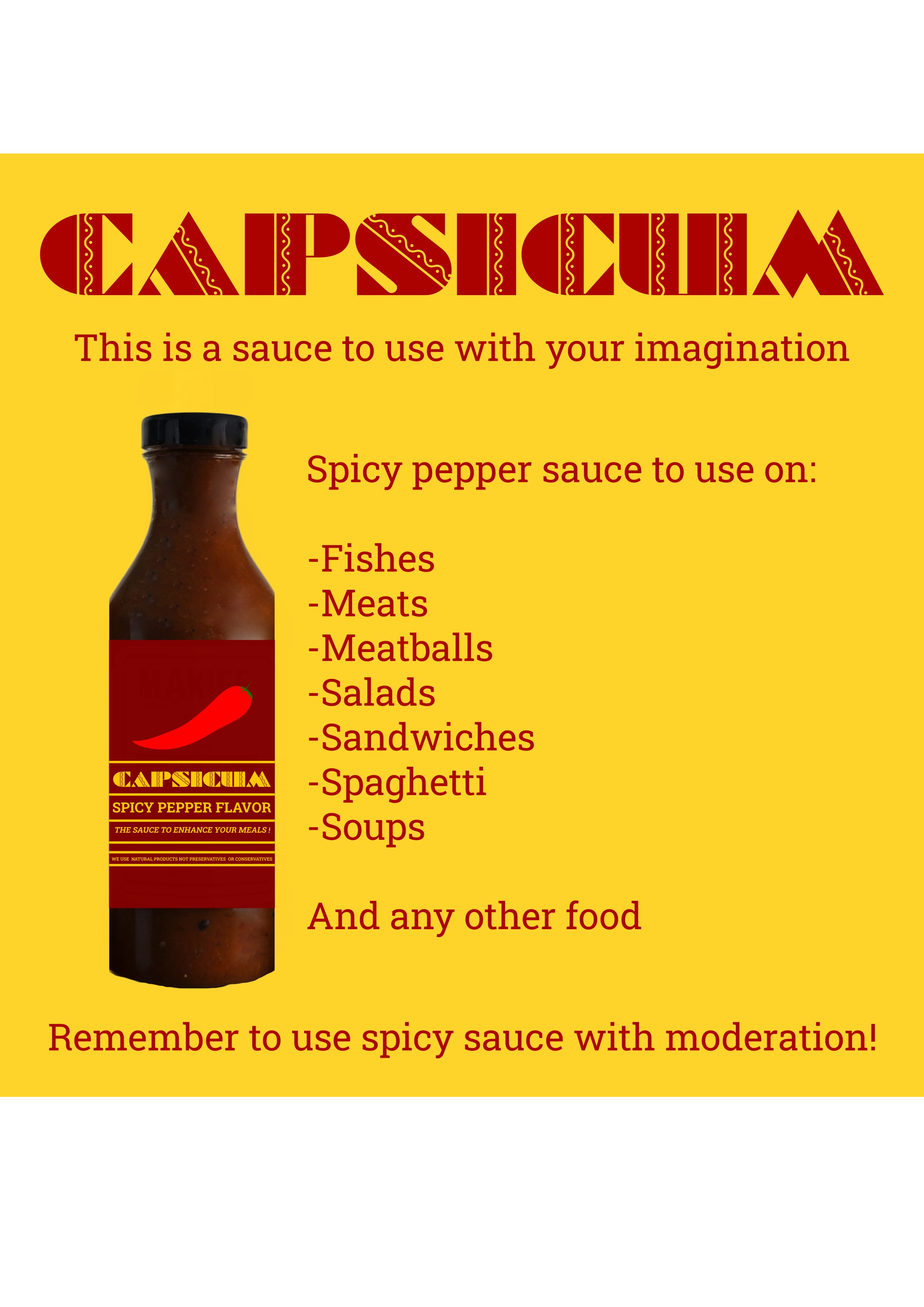
There are instances where “spaghettis” would be grammatically correct in English, although awkward. Please excuse my annoying pedantic detour. I can’t resist, even though I’ve tried.
In English, the word spaghetti can refer to either the shape of the pasta or the dishes created from the spaghetti pasta. Spaghetti is typically an uncountable mass noun (like water or rice), but spaghettis is occasionally used to refer to multiple varieties of the dish in specific contexts (like waters or rices).
For example, “The menu lists three different spaghettis” is grammatically correct, even though few people would use it that way.
Here’s another example of an uncountable mass noun converted to a plural count noun that might not sound quite so strange: “Starbucks sells many different coffees from around the world.” Other examples are “the waters of Finland” or “the rices of Cambodia.”
This is where every Italian gene in my body is prickling, so I’m going to have to raise the pedantry level here, I’m afraid.
In this instance I would always say ‘…three different Spaghetti dishes.’, or something like ’… three types of spaghetti’ if talking about different flavours, wheats, etc.
Spaghettis sounds so cumbersome to me that it makes my toes curl. My Italian ex-wife would be throwing things at this point!
It is not the same as your other examples. Waters pluralises a singular word, as does coffees and rices.
Pluralising spaghetti is the same as doing it with radii. You’d never say radiis. You’d leave it as it is, as it is already plural, or, if anglicising it, use radiuses.
I’m going to leave this here and I think we’ll just have to agree to disagree. Perhaps it is one of those US vs British English anomalies and it is more acceptable there, but to my Brit and part Italian ear, I think I’m going to have to partake in a couple of bicchieris of wine now!
Fish is a common noun that usually stays the same in both singular and plural (one fish, two fish). Fishes is used when talking about different species (the fishes of the North Sea).
Meat is generally an uncountable noun. The plural “meats” does exist, but it’s not common in everyday speech and is usually used when talking about different kinds of meat (like cured meats), not just more than one piece of meat (similar to spaghettis).
Salad is easy; it’s a countable noun with normal singular and plural forms (salad/salads).
Meatball is also countable, with regular singular and plural forms (meatball/meatballs).
Sandwich is a countable noun, and its plural adds “es” instead of an “s” (sandwich/sandwiches).
Soup can be either countable or uncountable, depending on how it’s used: “some soup” or “I love soup” (are uncountable), but “a soup” or “three soups” when you mean servings or types (are countable). An “s” can also be added when referring to different types of meat (once again, like spaghettis).
English grammar is confusing because it’s a messy composite of a half-dozen other languages. There are weird and illogicalexceptions to almost everything. Native speakers unconsciously memorize the stuff as small children, but becoming fluent in the language as an adult would be difficult. However, when I worked at a newspaper, there was a native Russian copy editor. I don’t know how a native Russian speaker can master the intricacies of English grammar, but he did.
Yeah, I wondered about that too, but I think the main difference is what one is used to hearing or not hearing. Nobody says spaghettis, even though it’s grammatically acceptable to do so when referring to varieties of spaghetti. On the other hand, it seems normal to hear, “the mineral waters of Europe” or the “many wines of France.”
The key is understanding what uncountable mass nouns are. An uncountable mass noun is a noun that refers to something that can’t be counted. For example, you can’t count spaghetti, wine, coffee, information, or water because these words are neither singular nor plural.
Even though it’s rarely done in many of these instances and more often in others, it’s grammatically acceptable to convert an uncountable mass noun into a plural count noun by adding an “s” when referring to different versions of the same uncountable thing or idea.
(Next up are collective nouns for tomorrow’s boring lecture)
I needed to look up much of this to refresh my memory of things I once knew better. It’s not as though I’m a walking grammar book. I have no idea how this stuff works in Italian or other Romance Languages.
By the was radius is a plain, old common noun, even though its plural is radii. It’s not an uncountable mass noun since radii can be counted (two radii, three radii, and so on).
I suppose the bottom line is to stick with what sounds correct to native speakers of any language rather than getting hung up on their grammatical oddities.
Just re-read this and realised that having edited it a couple of times before posting then not reading it properly that I buggered up the whole singular / plural thing. Ah the irony! Sometimes my own idiocy scares me!
Sorry again, here are the images re-loaded, and I have a “bug” (my fault with images), I just modified the image and added again, here are the three images (the red pepper with the flying hat), Yes I know, and I need to take care more on the details !