How do I interpret this flag print vendor template

Hi everyone,

This is my first time preparing artwork for flags for a client’s trade show, so I’d really appreciate a second opinion.

The client told me:

“We are getting flags printed – 2 x kinds, double sided - same on both sides”

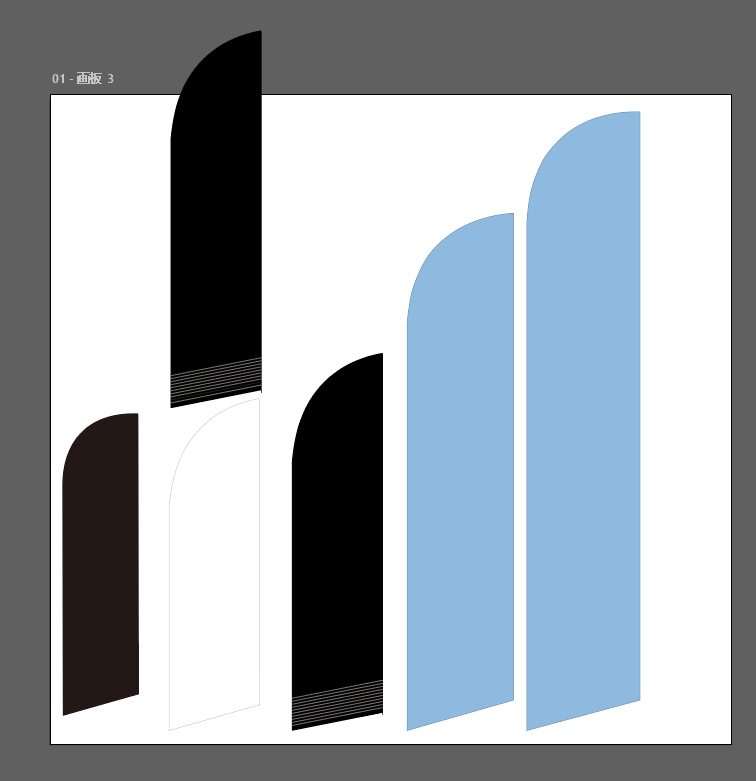
They supplied an AI file from the print vendor, but there are no instructions, dimensions, layer names (everything is simply named “Path”), or indication of which outlines are the artwork area, bleed, safe area, or construction lines.

I’m having trouble interpreting the template. The bottom edge of every flag is angled, and while I initially wondered if it was just a perspective drawing, I also googled and found that some flags are intentionally manufactured with an angled bottom edge. So I’m not sure whether this is a proper production template or if I’m simply misinterpreting it.

In particular:

  • Are these different flag sizes, or are some of them front/back templates?

  • Is the angled bottom edge intentional?

  • Does this look like a legitimate production-ready template? How to interpret it?

Normally I’d ask the print vendor, but communication is handled through my client, and from previous experience with this vendor, obtaining additional production guidance has been quite difficult (maybe language barrier or something else, the vendor is in China). Before I bother my client again, I was hoping someone with large-format print experience could help me interpret what I’m looking at.

Here’s the ai file :

Any insights would be greatly appreciated. Thanks!
The best answer will probably come from @PrintDriver

2 Likes

The widths and heights are already on each flag - like w 750.202mm and h 4100.234mm

So looks like you just need to pick the size and shape and apply your graphics.

2 of the black ones seem to have some sort of safe zone at the bottom.

Like yourself, there is no real clue in there.

So I’d go back and ask for exact dimensions and specficiations for full size, what bleed is required, what the safe zone for text etc.

If they can’t provide it then say you can do it to the dimensions in the file but it’s hit and miss and that the onus is on them.

Hi everyone,

This is my first time preparing artwork for flags for a client’s trade show, so I’d really appreciate a second opinion.

The client told me:

“We are getting flags printed – 2 x kinds, double sided - same on both sides”

They supplied an AI file from the print vendor, but there are no instructions, dimensions, layer names (everything is simply named “Path”), or indication of which outlines are the artwork area, bleed, safe area, or construction lines.

I’m having trouble interpreting the template. The bottom edge of every flag is angled, and while I initially wondered if it was just a perspective drawing, I also googled and found that some flags are intentionally manufactured with an angled bottom edge. So I’m not sure whether this is a proper production template or if I’m simply misinterpreting it.

In particular:

  • Are these different flag sizes, or are some of them front/back templates?

  • Is the angled bottom edge intentional?

  • Does this look like a legitimate production-ready template? How to interpret it?

    If these are double-sided flags, should the reverse artwork be mirrored (so the text appears reversed in the artwork file), or should both sides use the artwork in the same orientation?

Normally I’d ask the print vendor, but communication is handled through my client, and from previous experience with this vendor, obtaining additional production guidance has been quite difficult (maybe language barrier or something else, the vendor is in China). Before I bother my client again, I was hoping someone with large-format print experience could help me interpret what I’m looking at.

Here’s the ai file :

Any insights would be greatly appreciated. Thanks!

Thanks Smurf2, appreciate it. I’ve asked the client for clarification and I’m waiting for her reply.

One quick question regarding double-sided flags: when preparing the artwork for both sides, is the second side typically positioned as a mirrored layout (e.g. an element that appears on the left of one side is positioned on the right of the other side), while keeping the artwork/text itself readable?

Can you post a screenshot of the template?
I’m not a fan of downloading files.

As for double-sided flags, you design whatever you want on both sides of the flag. Usually yes the design is reversed except for the text. Hopefully it is 2 pieces of fabric stitched together with a blockout liner (or two pieces of black or gray backed fabric.) I don’t like making ‘flags’ this way. They are more aptly called “Banners.” They are too bulky to fly like regular single layer flags. There are single layer double-sided fabrics (and vinyls) but those are fairly stiff handed as well and not too many people print on it.

Thanks. Here is the screenshot. Only the second column, top flag and third column one have similar size

Not enough info.
Those are either the entire banner face including the pole pocket, or it is the live area. Differences matter as the pocket is stitched and you don’t want message running thru the stitching.

You also might want to know if there is other face stitching around the perimeter and how wide off the edge it goes.

The multiple diagonal lines look like an error in the file.

These things usually come in 7’-ish, 10’-ish, 13’-ish and 15’-ish. Exact size varies by vendor.
They are called Feather Flags if you want to research them more.

Thanks! If I’m not able to get a more detailed production template from the client, would it generally be safe to centre the logo and text and keep all important artwork at least 10 away from the edges?

My assumption is that the pole pocket and perimeter stitching wouldn’t normally extend anywhere near that far into the flag, but I’m not sure.

Yeh they look like they’re set up at the right widths and heights. Impossible to tell 100%. But if you can’t get any better then explain that and explain that’s the best you can do.

Of course, the other option is to turn down the work and walk away. No harm in that, it’s ok to say no.

Thank you!

I assume the client will be coordinating the printing with the printing company (a terrible trend, but that’s another subject). If so, do you know what company they will use? If it’s an online company, such as VistaPrint, the templates are available online. You can compare that template with the one you received, then make decisions accordingly.

Have you asked the client for clarification? I’m not suggesting that’s where the answer lies because, as often as not, they don’t know themselves, but it’s a starting place.

If all these things failed to resolve the issue, I’d turn down the job unless they agreed to reimburse me for the time spent trying to figure it out. When clients think they will save money by coordinating the printing themselves, I’ve often increased the fee to offset the likelihood of the very kind of hassles you’re dealing with.

I’d also ask the customer if you could contact the print vendor directly. Sometimes they’re a little territorial about doing it but the. printer will appreciate you checking and double checking so they don’t have to go back and forth with a lot of changes on the backend. Just my two cents, but it’s saved my bacon a few times.

Quick update:

The client checked with the printer and all they could provide was the finished flag size, then the client asked, “Does this help?”

Well, at least I now know the finished dimensions. :sweat_smile: However, I’m still unsure whether that’s enough to identify the correct template.
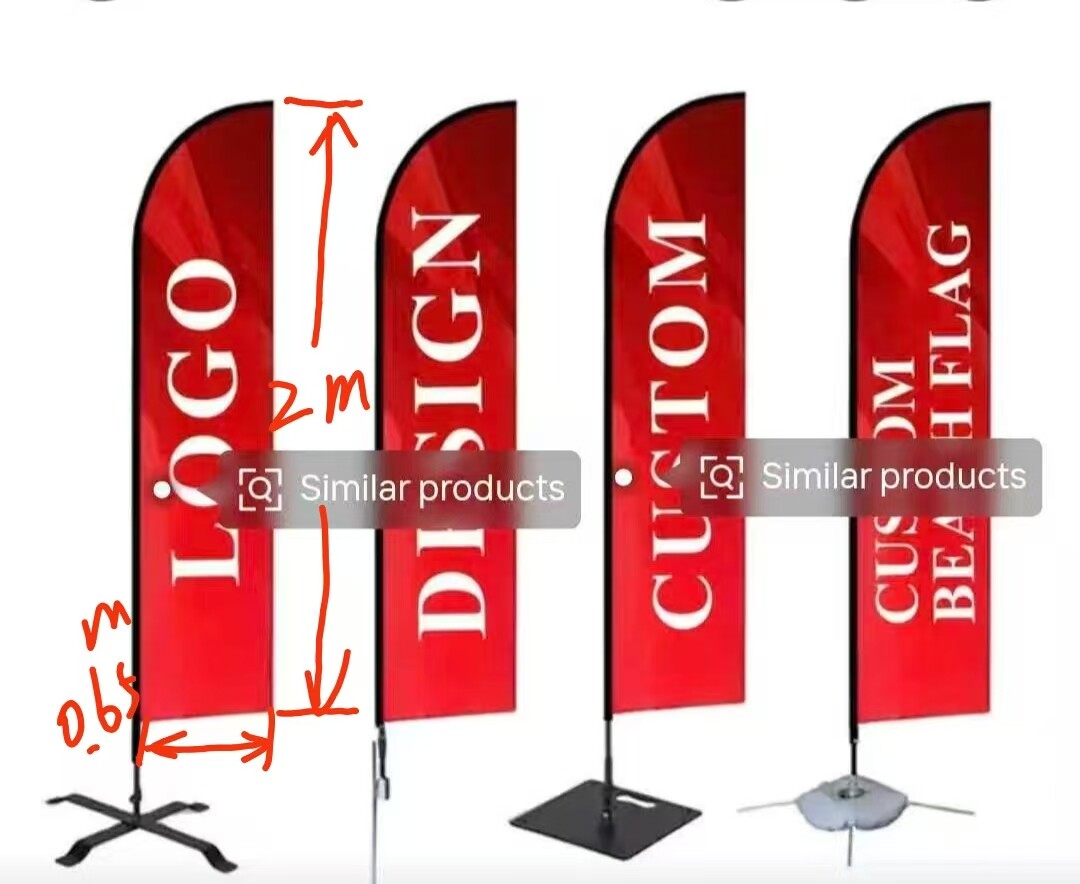
Since it’s a feather flag with an angled profile, I don’t know if it’s safe to simply match the finished dimensions to one of the outlines in the AI file, or whether the artwork shape, safe area and bleed are manufacturer-specific.

The finished dimensions also don’t appear to match any of the outlines in the supplied template.

Would you still be comfortable choosing the closest outline and scaling it, or would you consider the printer’s template incomplete without identifying which outline should be used?

Thank you. I could only identify the vendor from the company name embedded in one of the templates. I couldn’t find an official website, only an Alibaba listing (they appear to be a Chinese manufacturer). They may have a website in Chinese, but I wasn’t able to locate it.

Unfortunately, declining the job isn’t really an option at this stage. The project is already well underway—we have multiple milestones, around 80% of the work has been completed, and what’s left is mainly minor design revisions and applying the artwork to the correct production templates. I’d also like to maintain a good relationship with the client.

The deadline has been tight from the beginning, which I agreed to, so I proceeded with the designs using the provided dimensions while waiting for the production templates. I expected that once the templates arrived, it would simply be a matter of adapting the artwork. I didn’t expect the vendor templates themselves to be the biggest challenge.

Well you have the height and width now so go at it. Simple enough from this point.

Add a disclaimer, when you send the production files.

1 Like

I’ve always avoided Chinese printers and book binders for this very reason. I’ve seen great printing coming out of China, but asking them for clarification and instructions is all but impossible sometimes. The other reason is a lack of legal recourse in case they mess up the job.

Yeah, this is my first time working with Chinese printers. I’ve always had smooth experiences with European printers. Their guidelines are detailed and clear

Quick update.

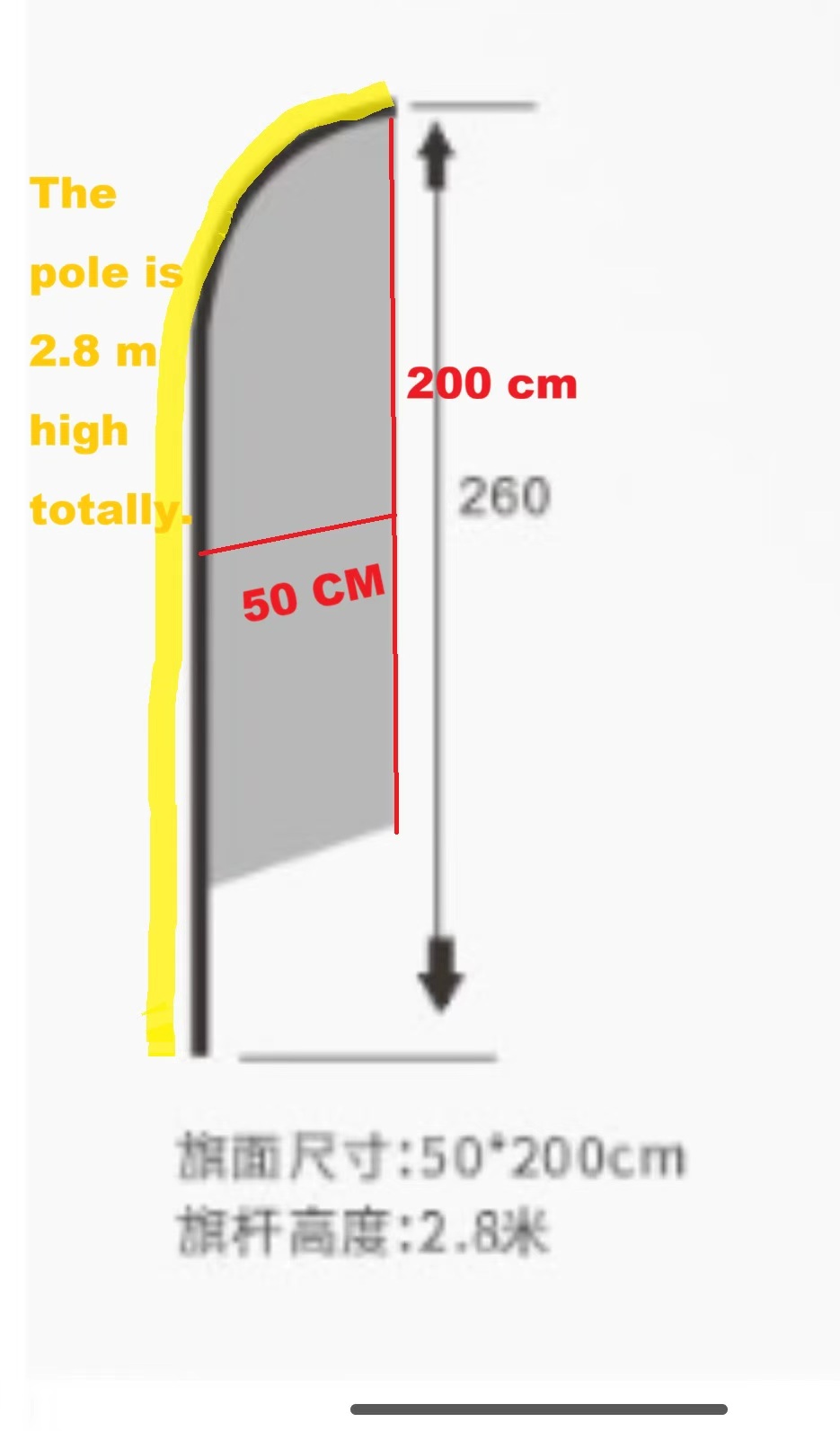
The client has now received another image from the vendor. It’s still not a production template, but it does show the dimensions of the flag.

What’s confusing is that yesterday the dimensions were given as 650 mm × 2000 mm, whereas this new image shows the flag itself as 500 mm × 2000 mm, with an overall pole height of 2800 mm.

Before I go back to my client, I’d like to get your opinion.

Do you think the previous 650 mm measurement could have referred to the production width (including bleed, hem, or pole pocket), while the visible flag is actually 500 mm wide?

Or is it more likely that the vendor has changed the flag size from 650 mm to 500 mm without mentioning it? If that’s the more likely explanation, I’ll clarify it with my client.

I’m just not sure whether the original 650 mm dimension could reasonably be interpreted as a production width rather than the visible flag width.