Website design and AI are getting ugly

I’ve been using some very interesting tools over the past few months, where creating web pages is becoming much easier than it was when I used platforms like WordPress, Rapid Weaver, and others. The reality is that the Internet is providing artificial intelligence as an effective tool for building websites. And I’ve found myself in a situation where, essentially, all I need to do is design what I want in an application like Affinity Studio or Photoshop—and that’s enough for me to begin building a dynamic web page. This leads me to ask whether web-page-creation programs will eventually disappear altogether.

I say this not to frighten people who rely on these platforms, but the truth is that I haven’t needed to use the web-page-creation applications I own ever since I started using AI-powered platforms to build exactly what I want. For example, I can use an AI platform to generate a design based on a reference I provide—a design I’ve already created myself, one that reflects precisely how I want the page to look. And once the platform delivers to me exactly what I designed—but in HTML—I can then move on to the dynamic parts of building that page, without having to write any code, and with the layout matching exactly what I designed in Photoshop or Affinity Studio.

What impresses me most is when I begin creating dynamic sections—such as integrating a calendar that can send me an email notification, redirect visitors to a payment page, and trigger a number of other features based on user interaction with the page—without writing any code or using any plugins. These capabilities make AI tools essential, in contrast to the tools we traditionally used—like Wix, Webflow, or similar applications. In short, I’m letting you know that my experience with these AI platforms has been overwhelmingly positive. And I’d like to know whether you believe it will soon no longer be necessary to use dedicated web-page-creation applications, given that today’s AI tools can already handle the entire job.

One of the things that impressed me most was when I asked the artificial intelligence to build a CMS so the person could edit the page while online—and it did so perfectly, with controlled access and everything needed for the person to become the administrator. This made me reflect on all the work I used to have to do to convert a client’s webpage into a CMS, and seeing how quickly this was achieved—without me having to do absolutely anything—made me realize just how incredibly useful this tool is when completing tasks that are—or were in the past—extremely complicated.

What are your thoughts on my intake?

Here’s what I’m using for each purpose:

  • Development: VS Code with Claude AI

  • Dynamic sections: Taskade AI

  • Graphics and visuals: Flora AI

I don’t think web design applications will disappear. Instead, I think web (and other) design methods are evolving. What you’ve described is just the beginning of a huge change.

You’re using all-purpose AIs (like Claude) to do things that I suspect will eventually be better handled by AI-enabled specialty apps (like VS Code, Taskade, or Flora) that have more fully integrated the underlying technologies from Anthropic, OpenAI, Gemini, etc.

This is already happening. VS Code could easily make even better use of AI than it does now, eliminating the need for Claude, Taskade, Flora, Figma, or whatever else someone might be using. The race now is to see who does the best job of integrating AI into the most user-friendly and capable specialized apps.

As an established designer who is mostly retired, I’m not dismayed by any of this, at least personally. It’s going to reduce the need for grunt work while opening new possibilities for creativity that aren’t constrained by the practical limitations of past processes.

However, AI-enabled workflows will greatly reduce the need for beginning and intermediate designers, which will disrupt everything, and now I’m speaking of design in general rather than just web design.

Someone contacted me earlier this week about designing a book cover. I wrote the creative brief, uploaded it to ChatGPT, and got a half-dozen options that weren’t at all bad. At that point, I picked one and continued to improve it using various prompts. Of course, AI is still pretty crappy with typography, and it can’t yet write decent PostScript (at least Claude told me that was the case), but that’s coming.

What’s puzzling me is what to charge. With a website design that might have taken XXX hours, AI might cut the time required by 50–90 percent. A custom design with extensive JavaScript and PHP coding that might have previously cost $50,000 will now go for what, $5,000?

Before answering how much one should charge today using these new tools, I’d like to mention that, regarding writing or legibility—things that fundamentally need to be written, right?—like in a book or a flyer or something similar, OpenAI has just recently announced a new model that handles text generation and image editing at remarkably sophisticated levels. It’s designed to accomplish three things within a single request: precisely target what needs editing in an image—without recreating the entire photograph—which is highly advantageous over earlier approaches; separately generate contextually appropriate text and position it accurately within the AI-generated or modified image; and reason about which visual or textual elements should or shouldn’t be adjusted during the requested edit. This capability is highly advantageous—and what OpenAI is doing will likely be copied and improved upon by many other platforms. So, within less than a year, we’ll have a truly professional-grade photographic and typographic editing platform usable without intervention from external programs like Photoshop.

Having addressed that, I’ll now explain my thoughts on how much one should charge—based on your question raised in your comment.

To answer your question—or rather, not answer it directly, but instead offer my opinion on what you wrote—I believe the value of your work has nothing to do with the number of hours you spend on it or with justifications for it. Let me clarify: I’m 52 years old and have worked as a brand designer for over 30 years. I started in the 1990s. I used equipment that no longer exists today—I physically walked inside a photomechanical camera, printed lithographic plates, and so on. None of that is part of my workflow today. Almost everything has been digitized, and the process has become extremely fast. The time I invest in projects today is, by comparison, insignificant. Yet instead of prices dropping because the work has become easier for me, the opposite happened: my prices rose significantly. And that’s not because the work itself is easier—i.e., prices shouldn’t drop just because the work is easier. You’re not paid for what you’re doing; you’re paid for what you know how to do. And those are two distinct concepts we must keep clearly in mind when generating income from our work—right? In this profession—which I still practice and which supports my family—I charge for my work in a different way.

In the past, billing was done differently; today, it’s done in a way aligned with the times we live in. Yes, work has become easier—and with artificial intelligence, it’s even easier still. But experience and knowledge are required to extract the very best from these new tools. And that’s arduous work—not everyone is willing to do it. Therefore, people today prefer to pay for not doing something rather than for not knowing how to do it. This positions you, as a designer, in a place where you’re not only designing—you’re also doing the work someone else doesn’t want to do, beyond your design. All these factors influence the final price you’ll offer a client. In my case, working with companies on a monthly retainer has worked extremely well—eliminating the need to itemize which services are billable and which aren’t, especially when addressing a company’s aesthetic needs and its capacity to implement its brand consistently across marketing and identity representation.

Paying a monthly fee is far better than paying for each individual service needed. And that includes having a dedicated space where you can worry about, store, search for, and retrieve everything related to your brand. That’s one of the benefits my clients have expressed they particularly appreciate.

Having said all this, I don’t believe artificial intelligence will lower costs—because the book cover example you gave using ChatGPT bears no resemblance to how I actually use AI for design, for instance, with Flora AI. Let me clarify: in Flora AI, I can use not only the image- and video-generation models offered by ChatGPT—I have all platforms at my fingertips and can work with them. I can integrate all of them as a single team, producing a unified project. And this is a creative way to deliver exactly what the client is asking for. However, this consumes far more time than when I used to work directly in Photoshop. In this sense, AI isn’t boosting my productivity. Yet it is enhancing the quality of the deliverables—making the wait worthwhile thanks to the superior result.

I hope my perspective helps you gain a clearer picture of how artificial intelligence might reshape the ways we monetize our skills.

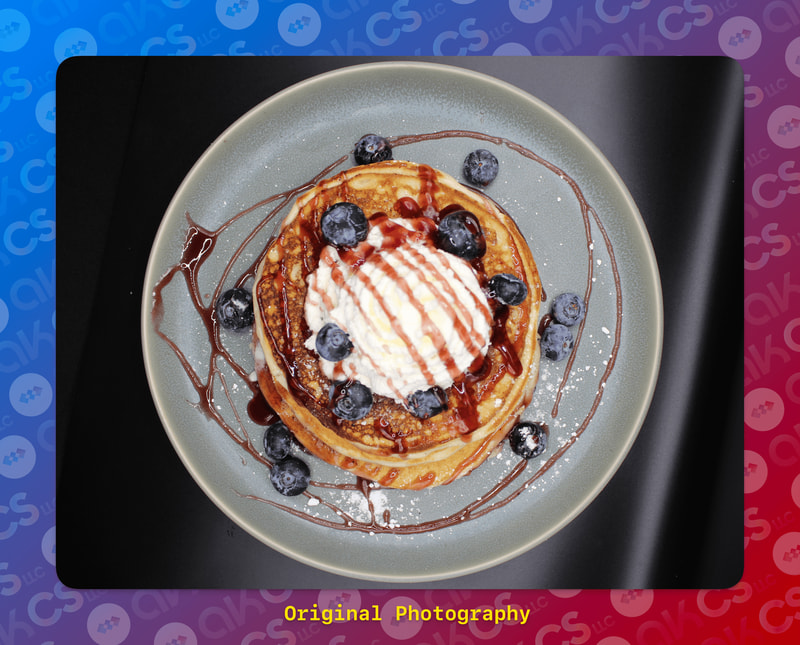
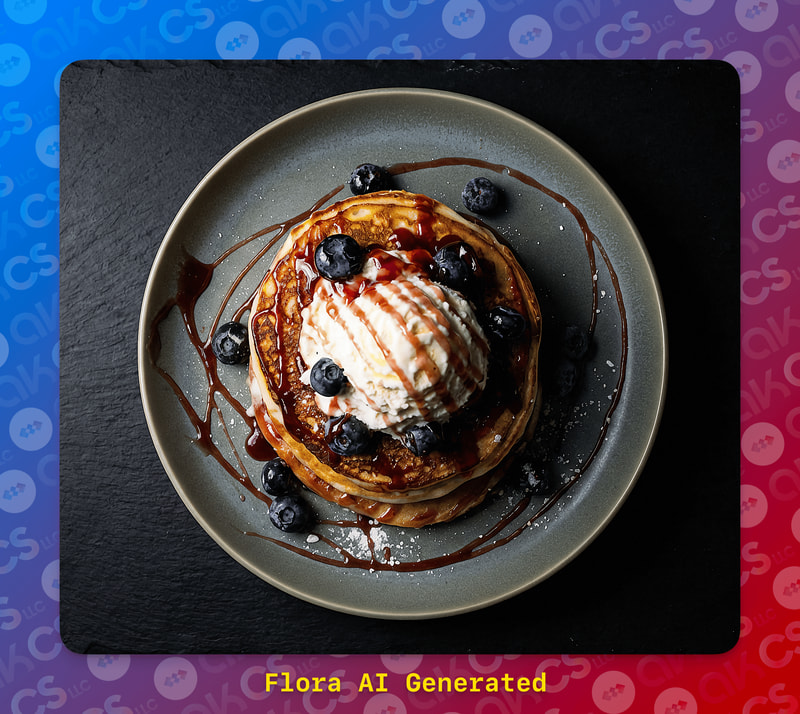
The Process to get Studio Photography results:

This is the before and after result:

:index_pointing_up:t3: Note: I used Linguix AI to fix spelling and grammar.

My question was rhetorical, but I’ll elaborate a bit since you responded.

You used hypothetical examples, so I’ll do the same. If I take on a job for $25,000 and the design boosts profits tenfold, the five-figure fee was a good investment; how I accomplished it or how long it took shouldn’t concern them.

Since technology has enabled me to, let’s say, double my productivity, I should be able to take on twice as many jobs and earn twice as much.

However, that logic doesn’t account for market forces that, on average, will bring fees into equilibrium with costs and time. In other words, other designers with equal skills will underbid me and still make a handsome profit. In turn, someone will underbid them until fees stabilize at various price points due to various factors.

This is basic economics, which isn’t to say there aren’t eddies in the current. For example, I can now do things that might have been cost-prohibitive in 1980. Today, a simple gradient might take seconds. In 1980, I would have spent an hour with an airbrush, plus the cost of the drum scan, camera work, and stripping. I might use the time I saved to do even more with digital creation tools, so the time spent stays the same, but the options and quality increase.

When I graduated from college in 1980, I charged $600 for a logo design. I had no experience, but I had no trouble getting small businesses to pay that much. I looked it up (thank you, Gemini), and inflation has raised prices by a cumulative, compounded rate of ~300% over that period. Yet Gemini also tells me that the average cost of a small-business logo in 2026 is ~$300 to $2,500. In other words, my beginner fee in 1980 is almost equivalent to the high end of an average small-business logo today.

Like you, my long experience has increased my income considerably since I graduated from college, which is the typical upward path of a successful career. With your 30-year career in brand design, you’re likely on the rarified upper end of the bell curve, working with clients willing to pay higher fees based on the return they anticipate from their investment, rather than trying to get the lowest price.

However, you and I don’t represent the average. We aren’t competing for work with Pakistanis and Indians on crowdsourcing sites, nor are we looking for work as junior designers at an agency that no longer needs as many of them to do the same amount of entry-level work.

We could cite anecdotes and examples ad nauseam, but on average, higher-end fees seem insulated from market forces for the time being; eventually, downward pressure will push them lower to align with past norms. For those at the bottom and in the middle, I’m expecting major, accelerating near-term disruptions that have already begun. The picture is complicated.

Thank you for joining this conversation—we both recognize the trajectory of the design industry and genuinely feel a touch of concern for newcomers. Yet, I see some points differently.

I believe AI will absorb the low-budget, price-sensitive clients—and that’s a tremendous advantage for emerging designers. Picture this: a skilled, imaginative designer sits across from a client seeking a logo. The client balks at the fee, calling it “too high.” In the past, they’d accept that cheaper often meant lower quality. Today? They’ll open Gemini (your go-to AI) and generate a logo in seconds—and walk away satisfied.

That’s precisely why real designers won’t waste energy on that kind of client anymore. Thanks to AI, the flood of bargain-hunters—those launching “wannabe” businesses or short-lived passion projects—will self-select into AI tools. AI serves those who:

  • Don’t intend to trademark their brand identity,

  • Don’t need a custom-designed, brand-specific typeface,

  • Prioritize speed and cost over distinction and longevity.

In effect, AI is clearing the path for professionals—elevating the industry’s value, profitability, and focus. No more hours lost on clients with no budget for thoughtful aesthetics. Instead: laser focus on long-term, values-aligned partners who invest in craft, consistency, and meaning.

Let AI handle the noise—so new designers can step confidently into the space of real creation: spending eight hours a day shaping commercial art that fuels sustainable business growth.

Here’s a real turning point for me:
When AI began churning out logos, caricatures, and flyers, clients started asking things like:

  • “I know you’re using ChatGPT to make those edits—it should be fast, right?”

  • “What AI did you use for that campaign PDF?”

Suddenly, the world assumed AI made our work effortless. I brushed it off—until cancellations started rolling in. That was my wake-up call.

I remember thinking: “Oh my God—people are truly outsourcing to a chatbox now. This is serious.”

Then came the shift: a new wave of clients began reaching out—the ones who truly care about their business. My family thrived because of them. They told me:

  • “Every AI-generated art looks the same.”

  • “I tried AI—but it wasn’t easy when I needed something specific*.”*

  • And now, my favorite: “Do you vibecode? I need someone who can vibecode something on my website.”

Just like that—a market emerged—for designers like me and others who dedicate their days to making businesses relevant, respected, and uniquely human.

The kind of client who cares whether their business cards are printed on textured stock—or whether the corners are rounded, or not.

That’s why I’m not worried. AI isn’t threatening our industry—it’s curating it.
Let it serve those who don’t care.
And let it push the ones who do—straight to us.

:index_pointing_up:t3:I used Linguix AI to edit grammar and spelling in my comment.

What happens when all the “us” die off? I’m not seeing a lot of viable pathways for newcomers to break into the upper end of a long career in this field. This started happening long before AI came along.

1 Like

Absolutely valid concern — and deeply felt. But here’s the hopeful truth:

:white_check_mark: Design will evolve — tools will shift, mediums will multiply, AI will handle more execution — but human vision, empathy, storytelling, and cultural intuition? Irreplaceable.
:white_check_mark: Not everyone can wield tools well — and fewer still can synthesize brand, audience, emotion, and ethics into a cohesive visual language. That’s where designers shine.
:white_check_mark: Social media isn’t just noise — it’s proof: people crave authenticity, identity, and recognition. And they’ll keep hiring designers to help them be seen, understood, and trusted.
:white_check_mark: The “upper end” of design isn’t vanishing — it’s redefining: strategy, systems thinking, ethical AI collaboration, cross-platform experience design — all expanding, not shrinking.

You’re not fading out — you’re stepping into a richer, more essential role. And newcomers? They’ll need mentors like you more than ever. I prefer a positive mindset, I really love designing and can’t see a world without it… thanks for replying.

:index_pointing_up:t3:Linguix AI was utilized to correct grammar and spelling errors.